


HARIO COFFEE
GRINDER・PRO
CGP-2-B|Coffee Grinder PRO
Make Grinding Easier. Make Grinding More Precise.
Engineered for coffee professionals and enthusiasts, this hand grinder delivers exceptional grind uniformity, a smoother grinding experience, and more consistent extractions with its Ghost Tooth Conical Burr, bearing-supported shaft, and click-adjust grind settings.
Highlights
- ・High durable stainless steel burrs
- ・Flat grinding profile
- ・Click-adjust grind size mechanism
- ・Fully disassemblable for cleaning
- ・Includes silicone rubber cover
- ・Particle size distribution within ±15μm
-
・Ghost Tooth conical burr geometry
(intersection of circular base and conical burr) - ・Equipped with bearings
Note: When publishing or evaluating numerical values or performance claims such as particle size distribution or grinding profile, the measurement conditions (e.g., grinder model, measurement method, and grinding parameters) must be clearly specified in the accompanying documentation. (Example not yet provided.)
Who is it For?
-
Coffee enthusiasts who want to reduce fines and
particle-size inconsistency for more repeatable extractions. -
Those looking for a smoother, more effortless
hand-grinding experience with less strain on the wrist. - Brewers who want to showcase the clarity, complexity, and distinct character of single-origin coffees.
- Users who value easy cleaning and straightforward maintenance in an everyday grinder.

Core Technology
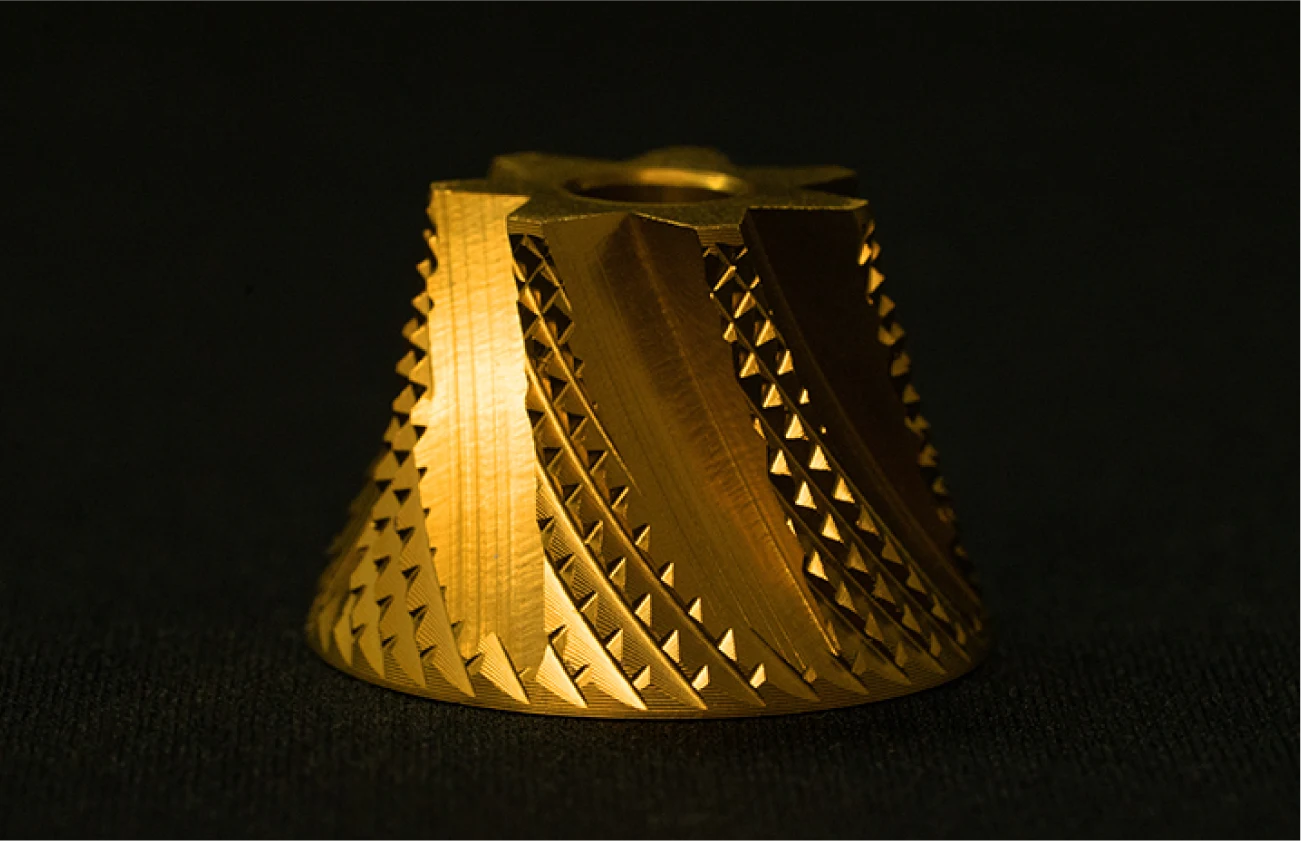
Ghost Tooth Burr Geometry
The burr features a truncated conical profile combined with
HARIO's Ghost Tooth geometry.
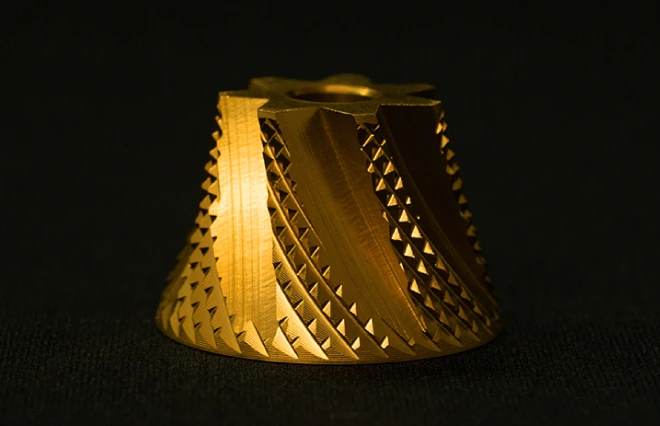
Arc-shaped cutting edges intersect in a grid-like pattern, forming sharp, pyramid-shaped cutting points at each intersection. Integrated feed channels on either side of the teeth help guide coffee beans toward the cutting edges, promoting stable bean feeding and efficient particle reduction.
Why this Design?
-
1. Crack, Then Grind
Beans are first fractured into smaller pieces before being grinded, enabling more controlled particle reduction.
-
2. Less Effort, Smoother Grinding
The cracking action requires less force than conventional burr designs, reducing wrist strain and promoting a more uniform particle shape.
-
3. Optimized Bean Feeding
Integrated feed channels guide beans smoothly into the burrs, promoting more consistent grind quality.
Impact on Grind Quality & Extraction
- Particle size distribution controlled within ±15µm with fewer lines.
- Promotes more even water flow and extraction consistency.
- Rounded, multi-faceted particles with greater surface area
- Enables faster, smoother extraction while reducing unwanted bitterness.
- Flatter extraction curve
- Delivers a cleaner, more balanced cup with greater flavor clarity and complexity.
Comparison with Conventional Conical Burrs
- Ghost Tooth Conical Burr:
- Uses a combination of piercing, rolling, and polishing actions through its pointed tooth geometry. A tighter outer clearance helps minimize particle-size variation.
- Conventional Conical Burr:
- Relies primarily on cutting and rolling actions. More prone to producing a mix of flat coarse fragments and fines.
Features
-
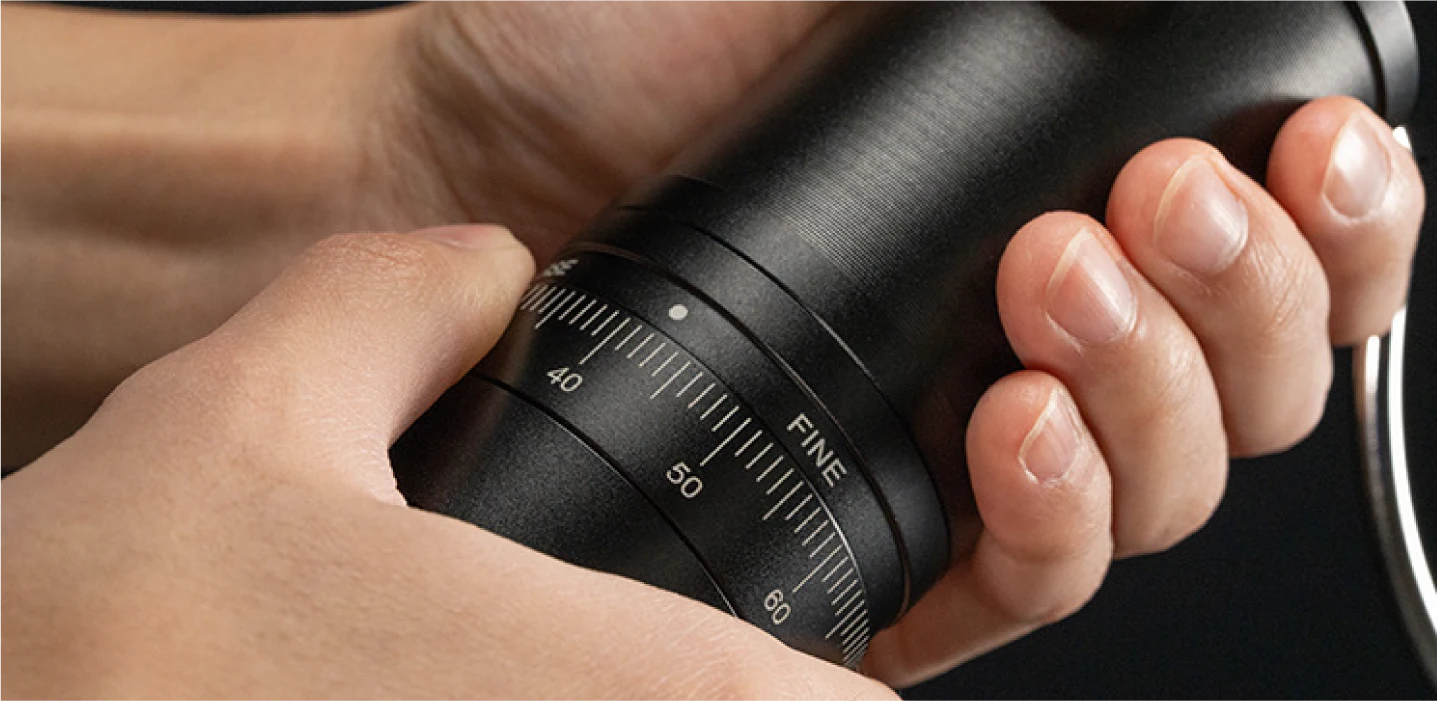
Clearly Defined Click Settings
Designed for easy and intuitive grind size adjustment.
-
Silicone Rubber Cover Included
Designed to be fitted onto the hopper during use.
-
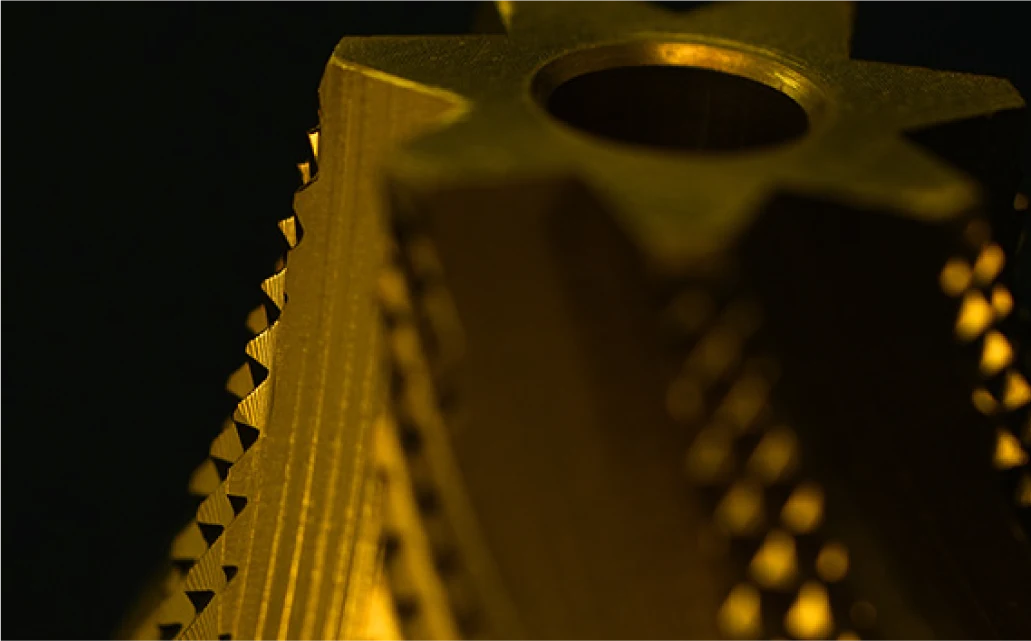
Ghost Tooth Conical Burr
Designed to improve grind uniformity for
more consistent extraction. -
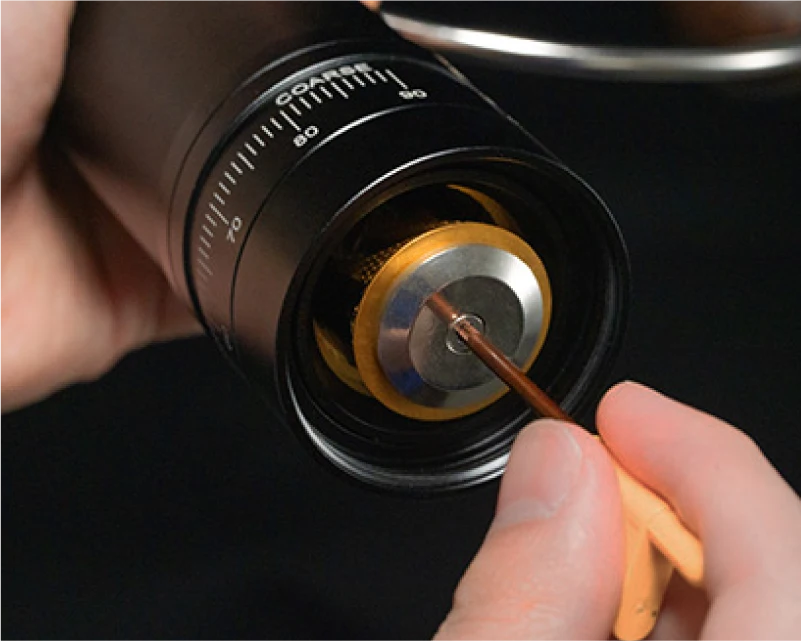
Easy Disassembly for Cleaning
The burr can be taken apart for easy cleaning.
-
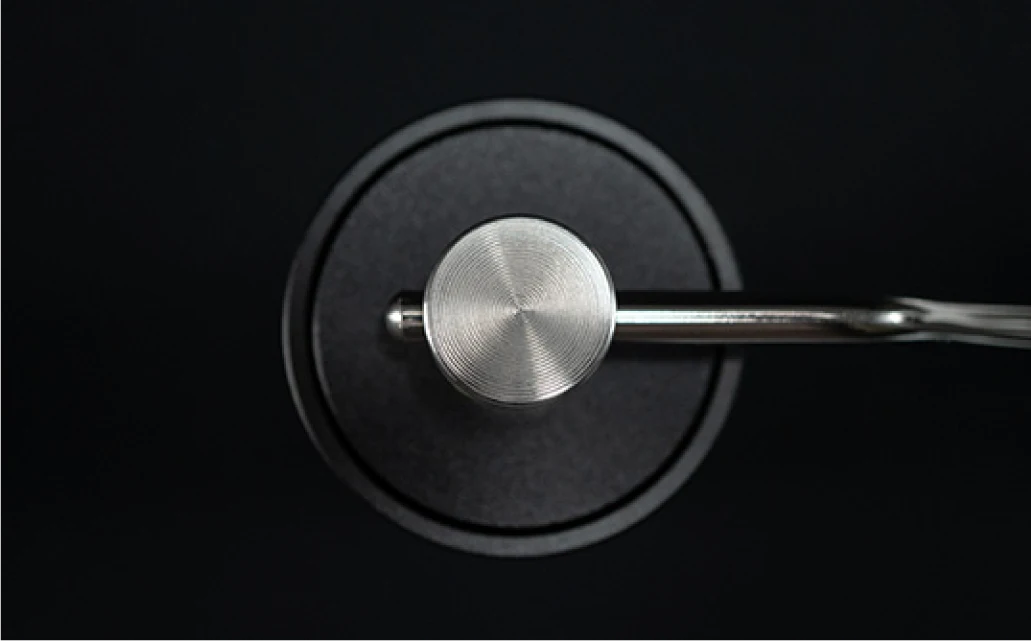
Bearing-Supported Grinding
Designed to reduce shaft movement for
smoother and more consistent grinding.


Grind Guide

Grind Adjustment Settings
When the upper and lower white dots are aligned, the grinder is set to 0 clicks.
Rotate the grind adjustment dial and count each audible 'click' as one adjustment step.
Note: The grind adjustment dial can be set beyond 90 clicks, but 90 clicks should be considered the maximum recommended setting.
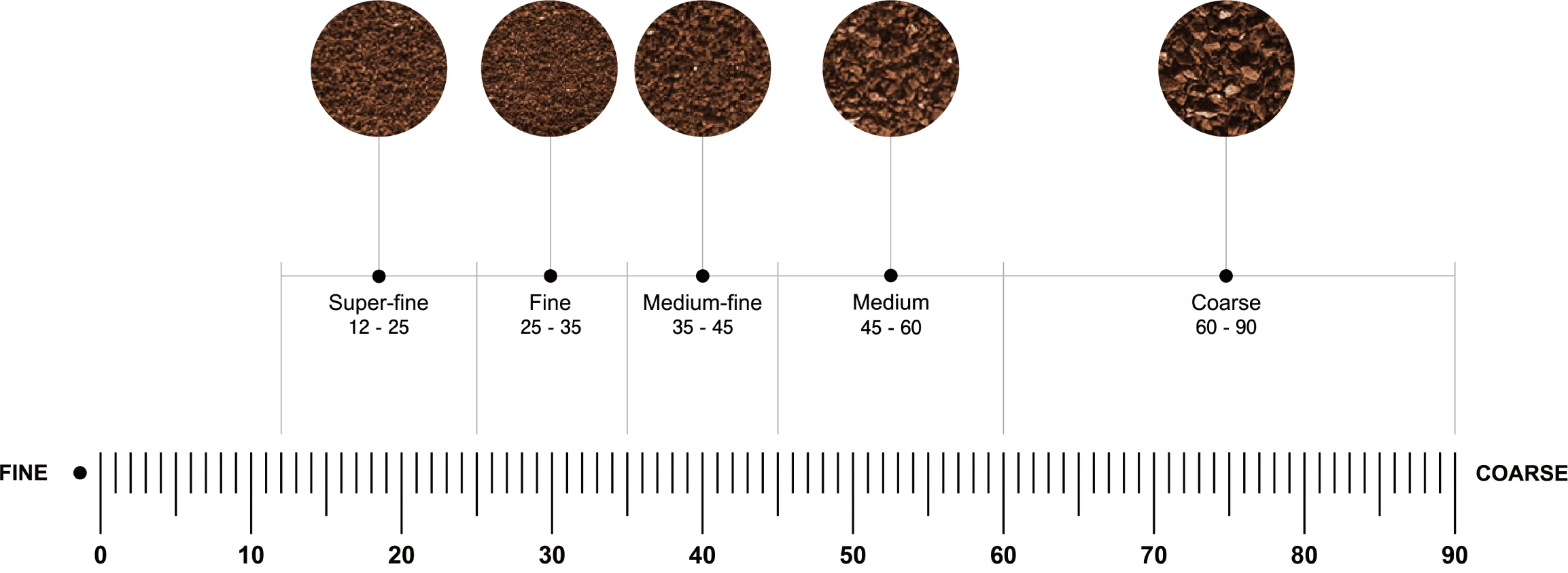
Recommended Grind Settings:
For suggested grind settings by brewing device —including V60, paper filter, metal filter, cloth filter, siphon,
water dripper, coffee maker, French press, and espresso. Please refer to the reference chart in the instruction manual.
How to Use
-
1. Fill the hopper with coffee beans and attach the lid.
Reference: 10‒12g of coffee beans per 120mL cup (approximately 1‒2 servings). -
2. Set the desired grind size.
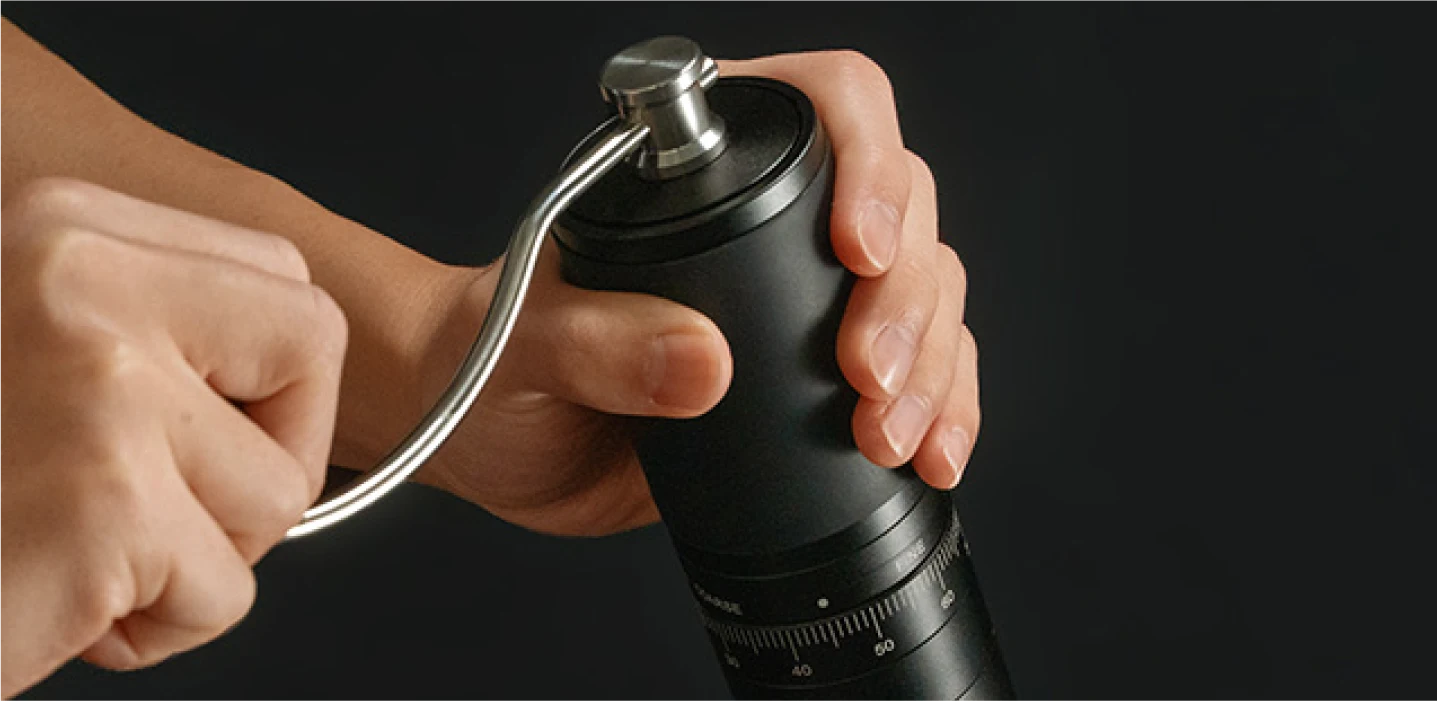
(Refer to the grind setting guide above) - 3. Hold the grinder firmly and turn the handle slowly in a clockwise direction.
*Do not turn the handle counterclockwise, as this may cause damage to the grinder.
Product Care
The burrs can be disassembled for easy cleaning. Be careful not to lose any components during disassembly. Remove any remaining coffee grounds with a brush or similar cleaning tool. To clean the exterior, wipe the grinder with a damp cloth that has been thoroughly wrung out. Do not rinse or immerse the burrs or grinder body in water.

Precautions
The burr is sharp. Do not touch it directly with your hands. Wearing safety gloves is recommended during cleaning. Do not turn the handle counterclockwise, especially when the hopper is empty, as this may damage the grinder.
Note: This product is not intended for use by children. Store the grinder in a safe place away from children's reach. Do
not grind anything other than coffee beans.

Specifications

FAQ
- Q. Where is the 0-click reference point?
- A. The grinder is at 0-clicks when the upper and lower white dots are aligned.
- Q. What are the recommended click settings?
- A. As a general guide; Superfine 12-25、Fine 25-35、Medium-fine 35-45、Medium 45-60、Coarse 60-90
- Q. Can I wash the grinder with water?
- A. No. Do not use water to clean the grinder. This includes the burrs.
- Q. Can I rotate the handle in reverse?
- A. No. Do not turn the handle counterclockwise, as this may cause damage to the grinder.
Disclaimer:
The figures, performance data, and evaluations on this page are based on testing conducted by HARIO using defined coffee beans,
doses, grind settings, brewing equipment, water temperature, water quality, brew time, and measurement methods. Results are provided
for reference only and may vary depending on these and other factors during actual use.
Test Conditions: Coffee bean (including roast level), dose, grind setting (click count), measurement method, and brewing parameters
(equipment, water temperature, water equipment, and brew time).